
·
3 min read
DynamicsMinds 2026 - Starfleet and moving from SaaS to OaaS
Notes from DynamicsMinds 2026.
A word on the setting: DynamicsMinds is a community-driven conference for the Microsoft …
Read More →Have questions? We're here to help.
A Rust review, an uncomfortable question: why does my Go forgive what Rust forbids? On transferring discipline between languages, as a pipeline instead of a resolution.
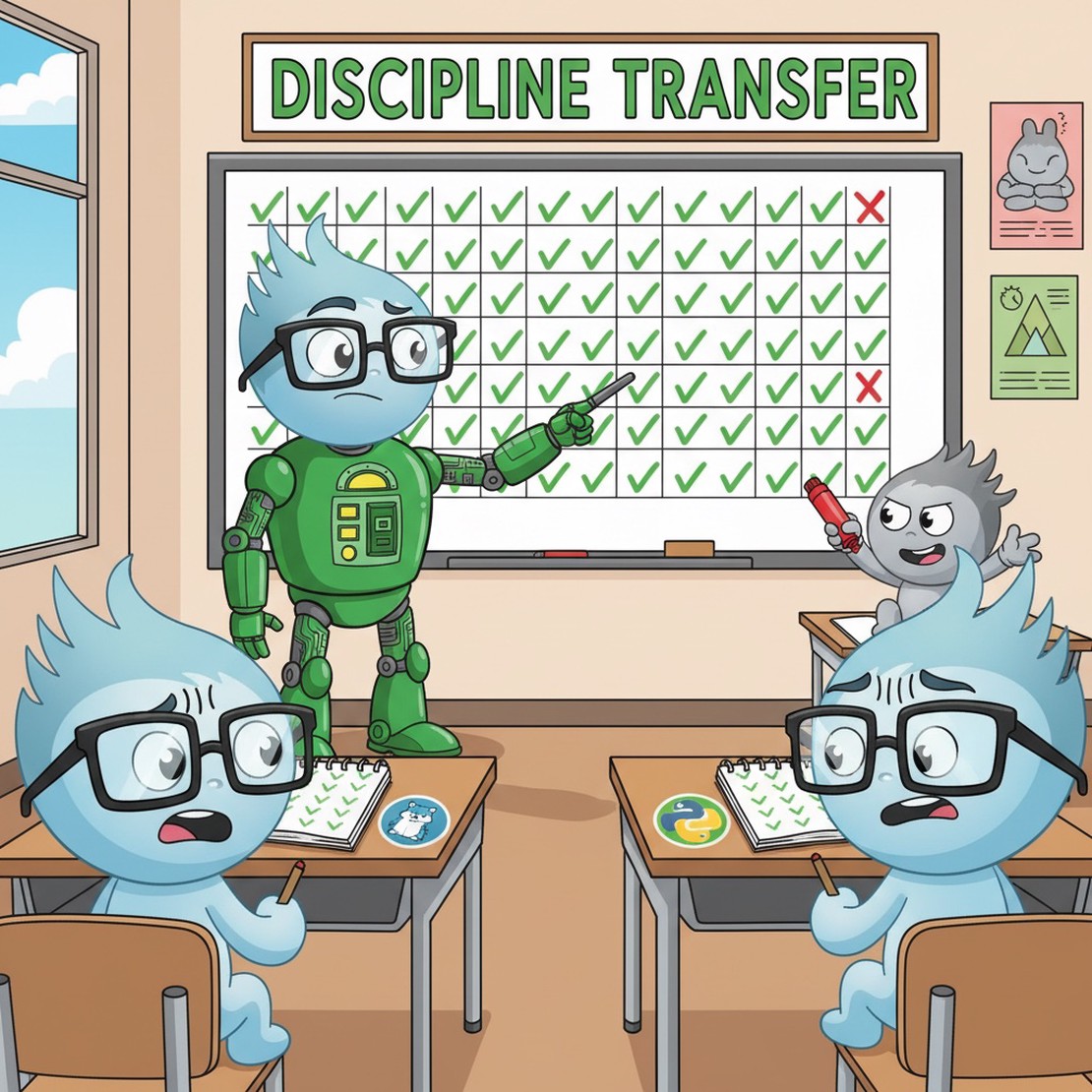
Reviewing a Rust codebase, I was reminded what makes that language special: the compiler refuses. A forgotten error case? Won’t compile. An unhandled match arm? Won’t compile. Whole classes of mistakes are simply not expressible.
Then the uncomfortable question: why does my Go forgive all of that?
Go is more tolerant. An error can be silently ignored. A switch may forget cases. That doesn’t hurt immediately. It hurts in six months, at night, in production.
So we tried the transfer: not porting the language, but the guarantees. For every Rust property there is a checking tool in Go. Ignored errors: errcheck. Sloppy error comparisons: errorlint. HTTP requests without a context, response bodies never closed: noctx and bodyclose. Eighteen checks now run under golangci-lint, and the pipeline makes them binding: no release while any of them is red. Much of what Rust’s compiler forbids, our pipeline now reports.
Result in a single Go project: around 60 real corrections. None of them had ever caused visible damage. The best one: require assertions inside an HTTP mock handler. When the assertion fails, the wrong goroutine dies, and the test can’t even fail properly. Exactly the kind of mistake that later becomes a mysterious ticket.
You can’t port a language. You can port discipline.
And because it went so well: Python got the same treatment. Three projects, three languages, one shared rulebook, each in the language’s own dialect.
Honestly: we didn’t adopt every strict rule. goconst mistook test data like “John” for magic constants, prealloc optimizes microseconds no CLI will ever feel. Both are off, with a decision record holding the why. Strictness without judgment is just noise.
My Go didn’t get stricter. My pipeline did.
Notes from DynamicsMinds 2026.
A word on the setting: DynamicsMinds is a community-driven conference for the Microsoft …
Read More →
At the Agentic Conf 2026 in Hamburg, I attended Paul Stack ’s talk “Operations follows Development” …
Read More →
Last week, Johann-Peter Hartmann reported on AI Dark Factory Patterns — a post I warmly recommend, including brutally …
Read More →